
The Product Ritual Loop - Turning One-Time Buyers Into Daily Users
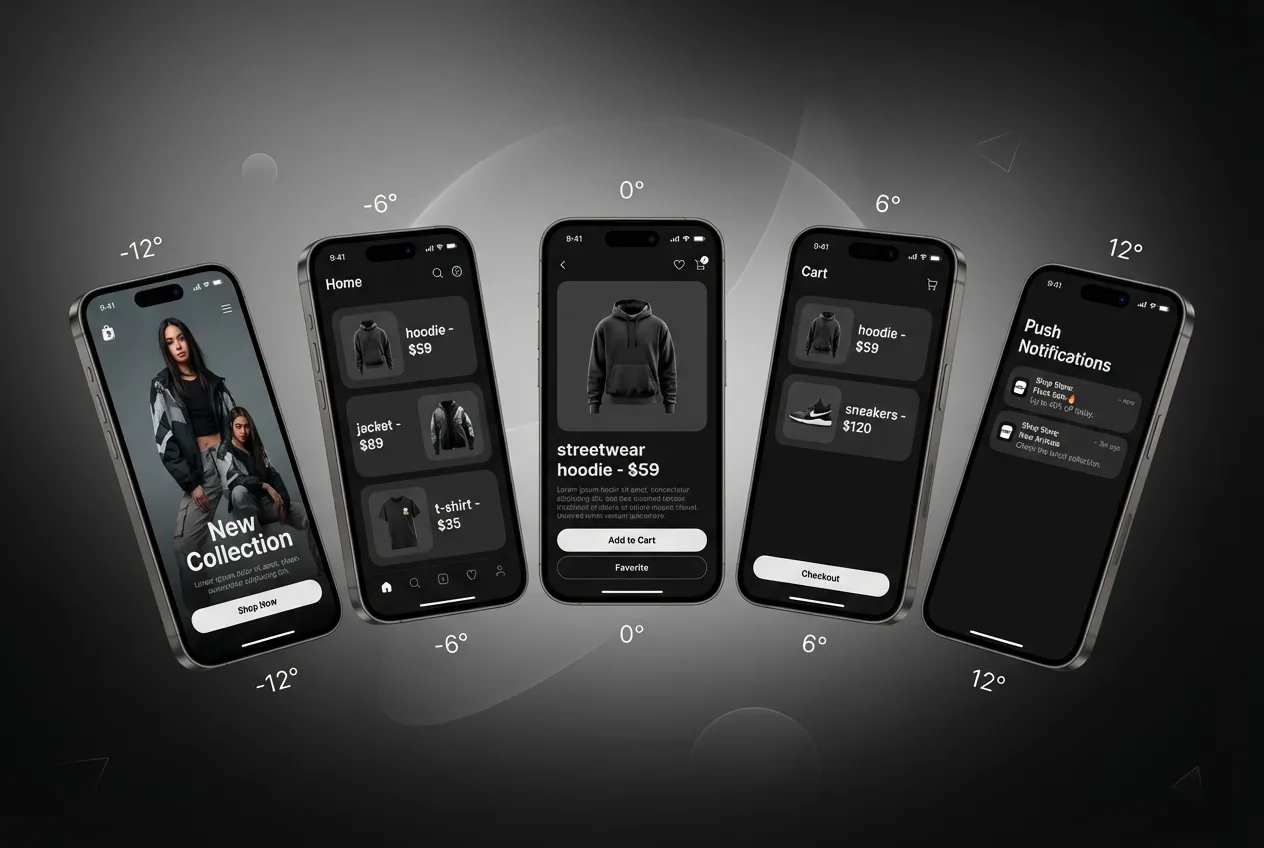
Describe it, preview it on your phone, ship it.
Start building free →Most retention thinking starts at the wrong place. It starts at "how do we get them to come back" — which assumes the customer has already drifted, and tries to fix the gap with a discount or a reminder. That's recovery work, and recovery work has a low ceiling.
The retention loops that actually move repeat purchase rates start earlier. They're designed into the product experience, not bolted onto the email program. The shape they share, regardless of category, is what we call the Product Ritual Loop:
Plan → Use → Track → Remind → Reorder → Upsell
Six stages, each one a place where a brand can either lose the customer or compound the relationship. Most Shopify brands operate at stage 5 (reorder reminders) and ignore stages 1–4. That's why their retention curves look the way they do.
Here's what each stage does, what most brands miss, and what good looks like.
Plan
The plan stage is where you set the customer's expectation for what success looks like. For a supplement, it's the protocol — what to take, when, how long until results. For a skincare line, it's the routine — morning, evening, layering order, what to expect at week 2 vs week 8. For fitness equipment, it's the workout schedule.
Most brands handle this with a "how to use" card in the box and a single onboarding email. The customer opens the box, glances at the card, throws the card away, and now their understanding of how to use the product is whatever they remember from the website.
What good looks like: the plan is a structured object the customer interacts with, not a static document. It knows what they bought, it personalizes the protocol to their goals, and it persists somewhere they can return to. A printed insert is a dead artifact. A live plan is a relationship.
Use
This is the stage everyone underestimates. The customer's actual use of the product is the only thing that determines whether the brand promise gets fulfilled. If they don't use it consistently, no amount of marketing will make them feel like it worked.
The retention math hinges on this stage. A customer who uses the product on day 14 is dramatically more likely to reorder than a customer who didn't, and the gap widens at day 30 and day 60. The reorder rate at day 90 is almost entirely a function of usage consistency in the first 30 days.
Most brands have no visibility into this. They ship the product, send a "how was it?" email two weeks later, and infer satisfaction from whether the email gets a click. That's measuring the wrong thing.
What good looks like: a daily-use surface that captures actual usage. A check-in. A photo log. A streak. A protocol step that gets marked complete. Anything that turns "did they use it" from a guess into a data point.
Track
Tracking turns usage into a story the customer can see. Without it, the customer's experience of the product is a vague feeling. With it, they have evidence — a streak count, a measurement curve, a before/after grid, a regimen consistency score.
Tracking is the thing that turns a transaction into a relationship. The customer isn't just using your product, they're seeing themselves change with it. That's the emotional layer that drives word of mouth, that drives the renewal, that turns customers into believers.
The mistake most brands make here is treating tracking as a feature for power users. It's not. It's the mechanism that converts a casual buyer into a loyal one, and the data point you collect at this stage is the leading indicator for everything downstream.
What good looks like: simple, visual progress over time. The customer should be able to see their journey in 5 seconds. Streaks, charts, photo grids, milestone markers. No dashboards full of metrics.
Remind
The reminder stage is where brands spend most of their retention budget, and it's the most over-optimized and under-effective stage in the loop. Klaviyo flows, SMS sequences, push notifications timed to engagement gaps — the volume of effort is enormous.
The problem is that reminders without context are noise. "Don't forget to take your supplement" is annoying after the third one. "It's been 5 days since your last log — your streak resets in 24 hours" is information.
Reminders work when they're tied to the user's actual state. That requires the brand to have the user's state, which requires the use and track stages to exist. Brands trying to optimize the reminder stage without having built the use and track stages are pulling on a rope tied to nothing.
What good looks like: state-aware nudges. Context-specific. Tied to streaks, depletion, missed sessions, or upcoming protocol milestones. Frequency tuned to what the user actually responds to, not a fixed cadence.
Reorder
The reorder stage is where most brands' "retention strategy" actually lives. A win-back email at day 45. A subscribe-and-save offer in the post-purchase flow. A replenishment reminder timed to an estimated consumption rate.
These work, but their ceiling is low because they fire at the calendar's guess of when the customer might need a refill, not at the customer's actual depletion. If you sold a 30-day bottle on June 1, your reorder reminder hits on July 1 — but if the customer used it inconsistently, the bottle is still half-full, the reminder feels presumptuous, they ignore it, and the trust erodes.
The brands moving repeat purchase rates above 40% are the ones triggering reorders on actual depletion data. The user logged 22 doses out of 30 — the bottle is empty, send the reorder. The user logged 12 — the bottle is still 60% full, don't send the reorder, send a re-engagement nudge instead.
What good looks like: the reorder offer fires when the customer is actually about to run out, not when the calendar says they should. That requires the use stage to be instrumented, which is why most brands can't do this.
Upsell
The final stage is the one most brands shouldn't even be thinking about until the first five are working, but everyone wants to skip ahead to it. The upsell — to a complementary product, a higher tier, a bundle, an annual subscription — only works when the customer is already in a successful relationship with what they bought.
Upselling a customer who hasn't been using the original product successfully is how brands generate one-time spike revenue followed by a refund wave and a churn cliff. The upsell has to come after evidence that the original purchase delivered.
What good looks like: the upsell is gated on usage milestones, not time elapsed. Hit week 8 of a skincare regimen with consistent logs and the brand knows the customer has experienced the product working — that's when the bundle offer for the next stage of the routine fires, and that's when the conversion rate is high enough to justify making the offer at all.
How to start with this loop
Most brands try to redesign their entire retention program at once, get overwhelmed, and ship nothing. The way to actually start is at stage 2 — Use — and build from there.
Pick the single most important usage event in your product's ritual. For a supplement, it's the daily dose. For skincare, it's the morning or evening routine. For a workout product, it's the session start. Build a way for the customer to log that one event in a simple mobile interface.
That single data point unlocks everything downstream. You can build streaks (track), state-aware reminders (remind), depletion-triggered reorders (reorder), and milestone-gated upsells (upsell) on top of one logging interaction.
Without that interaction, the rest of the loop is impossible. With it, the loop runs itself.
Build it, don't just read about it
Describe the app you want and Fastshot generates real React Native code you can preview on your phone and ship to the App Store. No credit card to start.
Build my mobile app →