
Running a Shopify Mobile App Without the Operational Headache
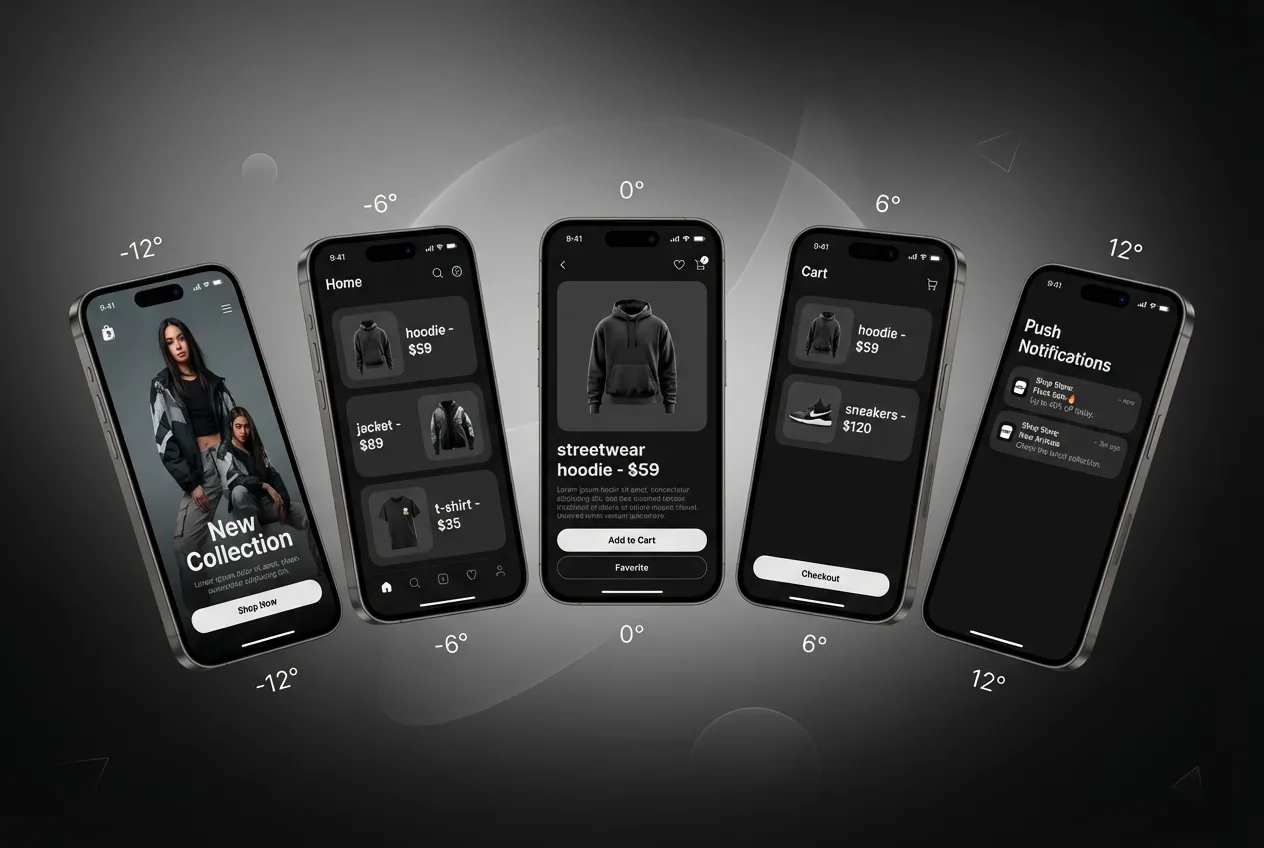
Describe it, preview it on your phone, ship it.
Start building free →The most common reason a Shopify brand doesn't have a mobile app isn't budget and isn't strategy. It's the operational fear. Founders running a 6 or 7 figure store with a lean team look at the prospect of "another channel to manage" and decide it's not worth the headache, even when the retention math is obvious.
The fear is rational. A mobile app, done badly, is a headache. App Store rejections, iOS version breaks, customer support tickets that can't be resolved by your existing flow, OAuth tokens that expire unexpectedly, push notification delivery issues, version fragmentation, in-app purchase compliance reviews. Each of those was a real war story for someone, and that someone wrote about it on Twitter.
Here's the honest accounting of what those headaches actually look like in 2026, and what an AI-generated companion app changes about each.
App Store and Play Store submissions
The original headache. A new feature ships, you submit to Apple, Apple comes back two days later with a vague rejection citing some clause of the developer guidelines, you fix the rejection, resubmit, repeat. Worst-case timelines of two weeks for a single update were not unusual circa 2018.
What's changed: Apple's review times average under 24 hours for most updates now. The rejection patterns are well-documented — the most common ones are about subscription disclosure language, push notification permission prompts, and metadata mismatches. They're predictable, and the fixes are formulaic.
What we do at Fastshot: every submission goes through a pre-flight check against the most common rejection patterns before we send it. The actual submission process is handled by us as part of the platform — you don't open Xcode, you don't manage signing certificates, you don't write release notes. When you change a feature, we ship the update.
What the operational overhead looks like for the brand: zero. There's no "submitting an app update" task on anyone's calendar.
Feature changes after launch
The second-most-common objection: "we're going to need to change things, and changing things in mobile is slow." This was very true in the agency-built era. A typical post-launch change cycle was: business team writes a spec, agency PM scopes it, agency engineer estimates it, two weeks of dev, one week of QA, one week of submission and approval. Total: 4–6 weeks for a simple feature change. Three months for anything substantial.
What's changed: with AI generation, the change cycle compresses to hours. You describe what you want changed — "add a streak counter to the protocol screen, make it show consecutive days, reset on a 48-hour gap" — and the change is generated, deployed, and submitted. The bottleneck shifts from engineering throughput to your decision-making throughput, which is usually the limit you actually want.
Where this still has a real cost: design coherence. If you're making 10 ad-hoc changes a month, the app's design language drifts. The discipline you need to develop is the same one you'd need with any agile development — maintain a vision for what the app is and isn't, and don't add features that fight the existing ones.
Customer support overhead
Founders worry about adding "another inbox." A new support surface means new tickets, new edge cases, and the team has to learn to triage them.
The honest answer is yes, you will get app-specific tickets. The categories are predictable: install issues on older devices, push notifications not arriving, syncing issues between web and app, login flows. Most of these are routine and resolvable from your existing support stack — Gorgias, Zendesk, Intercom, whatever you run — without adding tooling.
What we do: app-specific tickets get tagged automatically based on the screen they originated from, so your support team has context without having to ask. Common issues (push permissions, device compatibility) have built-in self-serve flows that resolve them without a ticket at all. The 24/7 account manager handles platform-level issues that aren't your team's job to figure out.
What the actual overhead looks like for a brand with $1–10M in revenue: 5–15% increase in ticket volume, mostly absorbed by existing flows. Net negative when you account for tickets the app itself prevents (subscription confusion, order status, replenishment timing).
OS version compatibility
iOS 19 ships, your app breaks on the new version, your customers complain. This used to be a quarterly fire drill.
What's changed: React Native + Expo, which is what Fastshot generates, handles 95% of OS-level changes automatically. The framework absorbs the API shifts, you don't. The remaining 5% — usually around new privacy permissions or notification framework changes — gets handled at the platform level, not by your team.
When iOS 19 ships, you don't do anything. The update propagates to every Fastshot-generated app at once.
Inventory, checkout, and customer data
The biggest fear for a mature brand is data fragmentation. "If the app has its own customer database, our analytics break." "If it has its own checkout, our subscriptions break." "If it has its own inventory, we have to sync it."
This is the headache that killed the first wave of mobile apps for ecommerce brands a decade ago. It's also the one most thoroughly solved in 2026.
How we handle it: there is no separate customer database, checkout, or inventory. The app talks to the same Shopify backend your storefront does, through the same APIs. A customer who logs in on the app sees the same order history as on the web. A purchase made in the app is a Shopify order, hits your existing analytics, triggers your existing flows. The companion features (logging, streaks, photo log) are stored alongside the customer record on Shopify's customer object as metafields, or in a tightly-scoped supplementary store that syncs on every event.
The integration is the boring kind: standard storefront API for catalog and cart, standard customer API for auth, standard webhooks for order events. Nothing custom, nothing fragile.
Push notification deliverability
Brands who tried push notifications via early app builders saw 30–50% delivery rates and gave up. The problem was usually permission prompts being asked at the wrong time and the user denying them, plus poor handling of token refresh.
What's changed: standard practice is now to delay the permission prompt until the user has experienced value — usually after their first meaningful interaction, not on first launch. Combined with Apple's permission-rate-limiting changes, deliverability has stabilized in the 70–85% range for apps that handle the prompt timing correctly.
We handle this. The default templates ask for permission at the right moment, the fallback flows catch users who initially declined, and the deliverability is competitive with the best-in-class consumer apps.
Total operational overhead, real numbers
For a brand running $1–10M in annual revenue with a lean team (founder + 2–4 operations/marketing), the actual operational footprint of a Fastshot-generated mobile companion is:
- Hours per week from the brand's team: roughly 1–2, mostly for content updates (push notification copy, education content, new product additions to the stack builder).
- Engineering hours: zero. There's no engineer on the brand's side.
- Support load increase: 5–15% on ticket volume, generally net-zero or net-negative on resolution time once self-serve flows are in place.
- Submission/release management: zero. The platform handles this.
Compare to the alternative: a full custom build via agency runs $100–250k upfront and roughly $5–15k/month in maintenance. A Tapcart-style storefront builder runs $2–5k/month with a different (lower) capability ceiling.
The operational headache that used to make mobile apps untenable for sub-$10M brands has structurally changed. The reasons not to ship a companion app in 2026 are strategic — does your category benefit from a habit layer — not operational.
See what running a mobile companion looks like for your store.
Build it, don't just read about it
Describe the app you want and Fastshot generates real React Native code you can preview on your phone and ship to the App Store. No credit card to start.
Build my mobile app →